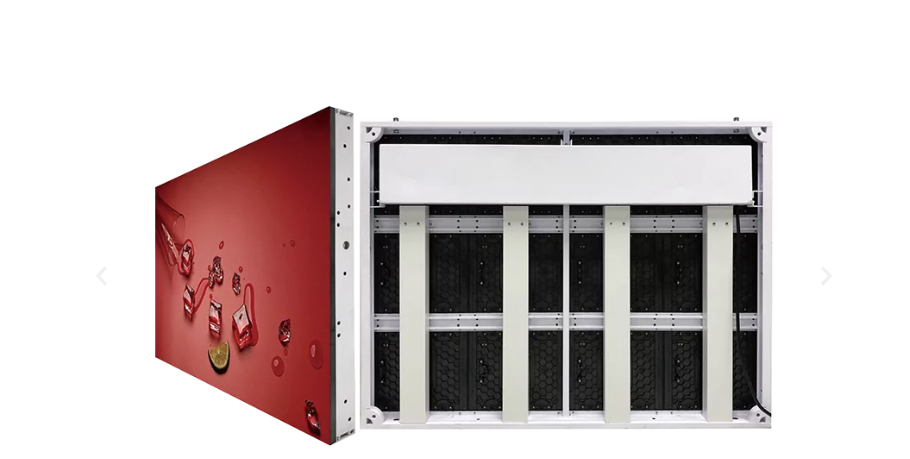
Different public environments place very different demands on digital signage. Roadside campaigns prioritize visibility and viewing distance, while stadiums need clear imagery across large spaces. Transport systems focus on readable information, and smart-city projects often require continuous operation. Choosing an outdoor LED display therefore starts with the application rather than a fixed specification. Ledman’s NS Series illustrates this approach with pixel-pitch options from 5.7mm to 10mm, alongside high-brightness visibility and energy-saving characteristics.
Roadside Advertising Requires Distance-Based Planning
Advertising beside highways or major urban roads is usually viewed from considerable distances. Pixel pitch should therefore correspond to the expected audience position instead of automatically favoring the finest available specification.
Brightness becomes particularly important under direct sunlight. Content needs sufficient visual separation between text, graphics, and background elements so that messages remain readable during daytime traffic.
Content design matters just as much as hardware selection. Short messages, strong visual hierarchy, and appropriately sized typography can communicate more effectively than dense promotional layouts.
Stadiums Demand Wide-Area Visibility
Sports venues create a different viewing environment because spectators may sit at widely varying distances and angles. Perimeter displays must remain visually consistent while supporting fast-changing graphics, scores, sponsorship content, and event information.
Refresh performance deserves attention where cameras frequently capture the screen. Poorly matched settings can create visible artifacts in broadcast footage, making technical configuration an important part of venue deployment.
Physical placement also affects specification choices. Displays installed close to spectators may require different protection and maintenance considerations from units positioned higher around the stadium structure.
Transport Displays Prioritize Readability
Transit environments depend heavily on timely information. Railway stations, bus terminals, airports, and roadside transport facilities may use digital displays for schedules, route information, alerts, and public announcements.
Text clarity becomes a central consideration because passengers often have only a few seconds to read changing information. Font size, contrast, refresh behavior, and viewing distance should therefore be evaluated together.
Operational reliability also carries greater weight in transport applications. Maintenance access, remote monitoring, content management, and energy consumption can influence the practicality of long-term deployment.
Beyond static readability, transport displays must handle variable lighting conditions—direct sunlight, tunnel darkness, and platform shadows—which demand high-brightness panels and automatic ambient-light adjustment.
Smart Cities Require Flexible Communication
Urban digital infrastructure can serve multiple purposes within the same network. Public notices, emergency messages, cultural information, traffic updates, and community announcements may share display resources.
Such installations often operate for extended periods, making power consumption relevant to project planning. Energy-saving technology can reduce ongoing electricity demand without changing the communication role of the display.
Network integration deserves similar attention. Centralized content management allows authorized teams to update multiple locations while maintaining consistent scheduling and messaging policies.
Equally important is the system’s ability to adapt content dynamically based on time, location, or audience. For instance, a display near a school might show slower traffic warnings during drop‑off hours, then switch to cultural event listings in the evening. This requires not only centralised scheduling but also real‑time sensor integration—such as air quality or foot‑traffic data—to trigger automated updates.
Match Pixel Pitch To The Viewing Environment
Pixel pitch should be selected according to viewing distance, content type, and screen dimensions. Smaller pitches generally support finer detail at closer distances, whereas larger pitches can be suitable when viewers remain farther away.
The Ledman NS Series offers 5.7mm, 6.66mm, 8.88mm, and 10mm configurations. Such choices demonstrate why application-specific planning is more useful than treating every public display project identically.
Budget considerations should also be connected to visual requirements. Selecting excessive resolution for a distant roadside installation may add cost without producing a noticeable improvement for the intended audience.
Build Specifications Around The Application
Every deployment has its own priorities. Advertising projects may emphasize daytime visibility and creative flexibility; stadium installations can focus on viewing angles and camera performance; transport systems require clear information delivery; smart-city networks often prioritize energy use and centralized control.
The most appropriate outdoor LED display specification emerges from these practical requirements rather than from a single universal formula. Site conditions, operating schedules, content formats, maintenance access, and future expansion should all enter the evaluation.
Conclusion
Public display technology works best when its specification reflects the environment in which it will operate. Roadside advertising, sports venues, transportation networks, and smart-city infrastructure each demand different balances of visibility, resolution, energy use, content management, and serviceability. With several pixel-pitch options and an emphasis on visibility in bright environments, Ledman’s NS Series provides one example of application-oriented product selection. Careful planning allows the final outdoor LED display configuration to support its intended audience without adding specifications that serve little practical purpose.
