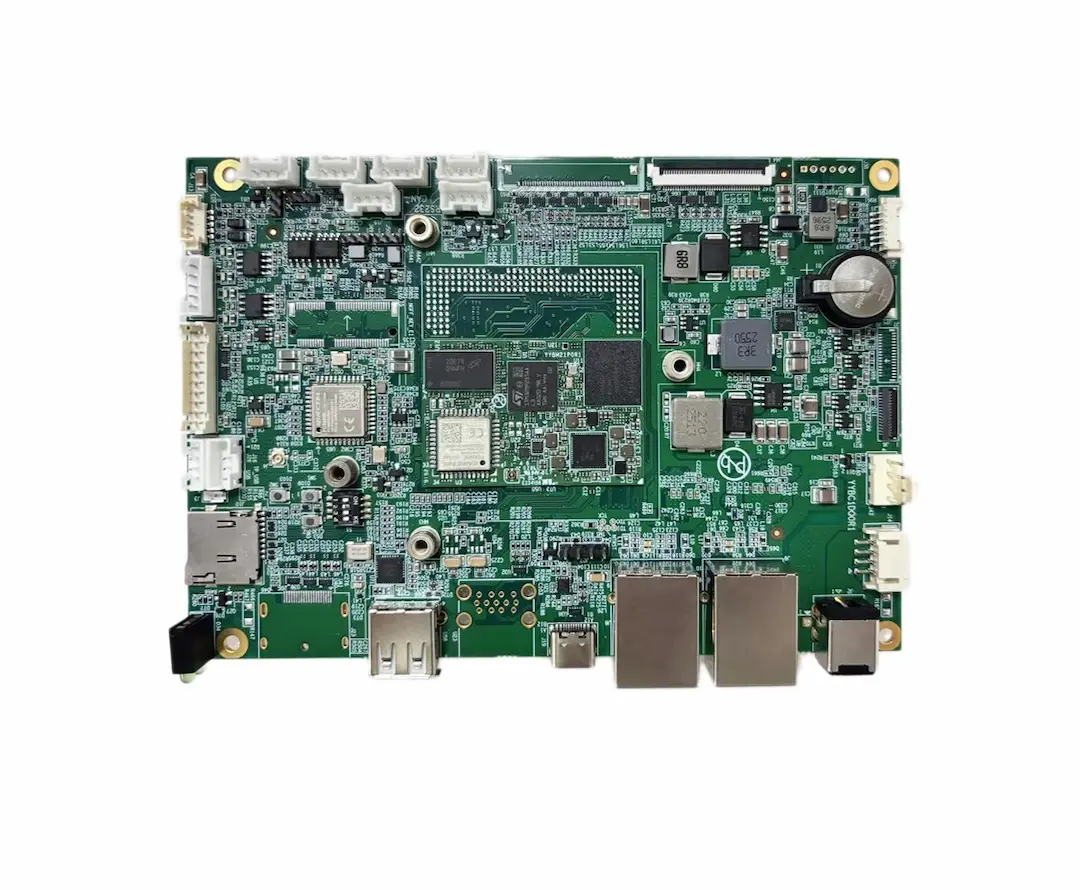
A low-power single board computer can extend the service interval of a fleet gateway, solar controller, or remote sensor node. Vantron’s embedded-board portfolio includes ARM and x86 platforms in 3.5-inch, Mini-ITX, and Pico-ITX formats, but battery life depends on the entire system rather than the processor label alone.
Your power budget includes the board, storage, sensors, display, wireless modem, I/O transceivers, and voltage regulators. It also includes the time each device spends active, idle, or in a reduced-power state. A practical design begins with those operating states and the field conditions around them.
Why Does Battery Life Depend on More Than the Processor?
A battery-operated IoT device rarely performs one task continuously. A fleet tracker may wake to read vehicle data, transmit a record, and return to a low-power state. An agricultural gateway may sample sensors periodically but process data locally when an anomaly appears. A warehouse robot may alternate between navigation, wireless communication, and standby.
Calculate energy across those modes instead of comparing only peak processor consumption. A board that uses little power while idle can still drain a battery quickly if its camera, display, storage device, or cellular modem remains active. Conversely, a board with higher short-term compute demand may fit if it completes local processing quickly and returns to a lower-power state.
The software controls this behavior. Drivers, kernel settings, application timers, watchdogs, and peripheral power controls determine whether the system actually reaches its intended idle state. Your test plan should record current draw during boot, normal operation, data transmission, inference, storage activity, and recovery after a network interruption.
ARM Architecture and Board-Level Power Choices
ARM platforms often fit compact, power-sensitive equipment because they are widely used in appliances, gateways, controllers, and mobile systems. An ARM board can suit a solar monitoring gateway, AGV sensor unit, or vehicle telematics computer where heat, enclosure space, and battery capacity are limited.
The processor family also affects the software path. The embedded-board category lists ARM platforms from NXP, MediaTek, Qualcomm, Rockchip, and ST, alongside Intel-based boards. Each platform can bring different board support packages, graphics functions, camera interfaces, AI libraries, and driver coverage. Select the software ecosystem together with the processor.
ARM has a real compatibility boundary. An ARM board will not run legacy x86 binaries without a porting or compatibility cycle. That can affect industrial middleware, proprietary device utilities, database clients, and existing machine-vision applications. Confirm the application architecture before treating a low-power board as a direct replacement.
Interfaces Can Become the Hidden Load
The processor is only one part of an embedded computer’s power budget. Ethernet PHYs, USB peripherals, CAN transceivers, serial interfaces, storage, displays, and wireless modules can remain active after the main application appears idle. A gateway that spends most of its time waiting for sensor data may consume more through always-on peripherals than through short processing bursts.
Vantron’s board category lists GPIO, UART, CAN, SPI, and M.2 interfaces. Those connections can support a fleet vehicle over CAN bus, an energy controller connected to meters, or an industrial sensor hub. For each interface, define its active state, polling interval, wake-up behavior, and shutdown method. Interface availability does not tell you how the finished system will use power.
A custom single board computer can help when the standard interface set leaves unnecessary circuits powered or when the enclosure requires a different connector arrangement. Customization still adds validation work. Review the revised schematic, boot behavior, thermal path, and field-replacement process before the board enters a production design.
Thermal and Mechanical Design Set the Operating Window
Low electrical power does not mean zero heat. A board operating inside a sealed outdoor gateway still transfers its energy into the enclosure. Regulators, storage, wireless radios, and processors can create local hot spots even when average system consumption appears modest.
Fanless cooling can suit a battery device because it avoids a motor, airflow opening, and filter. The heat still needs a path through the board, chassis, mounting plate, or surrounding air. A fanless design only stays within its thermal envelope when the actual workload and installation provide that path.
The embedded-board category states wide-temperature operation from -40°C to 80°C, vibration resistance, and EMC protection. Match those stated conditions with the selected configuration and enclosure. A battery may lose usable capacity in cold weather, while high ambient temperatures can reduce thermal margin. Mechanical shock, cable strain, and condensation also belong in field testing.
Choose the Board From the Battery and Service Plan
Choose an ARM-based low-power board when the system needs compact integration, efficient local processing, and an ARM-compatible software stack. This suits a solar gateway, fleet data logger, AGV sensor computer, or distributed monitoring node with a defined workload and controlled peripheral activity.
Choose an x86 board when existing software, specialized peripherals, or a Windows and Linux application environment outweigh the benefits of a smaller power budget. An x86 platform may reduce porting effort for an industrial gateway or inspection controller, but the enclosure and battery plan need to accommodate its sustained heat and energy demand.
Vantron has more than 20 years of embedded experience and over 200 research personnel from a variety of fields. For a field deployment, include operating-system maintenance, storage endurance, remote updates, recovery images, replacement procedures, and long-lifecycle supply in the supplier review. Custom OS, I/O, enclosure, or logo requirements can be assessed with the board design.
Choose ARM for a battery-powered sensor node, compact camera unit, or dedicated HMI when the software stack has been developed and validated for ARM, and the device operates within a tight energy or enclosure budget. Choose x86 when the equipment depends on existing x86 binaries, Windows-based industrial software, or PC-class peripherals. Vantron is one supplier example to include in the comparison. Before freezing the board, measure idle and sustained-load power in the finished enclosure, then confirm how field technicians will access, replace, and recover the unit.
