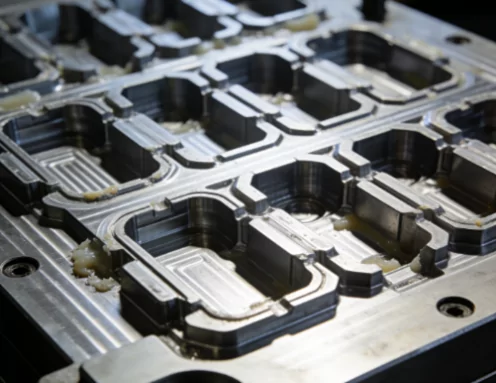
Clamping force is a fundamental parameter in injection molding, directly influencing product quality, mold safety, and production efficiency. For manufacturing enterprises, inaccurate clamping force calculation can lead to defects such as flash, mold misalignment, or excessive equipment wear. Therefore, mastering how to calculate clamping force in injection molding is essential for achieving stable and cost-effective production. By combining theoretical methods with practical tools such as the injection molding tonnage calculator, engineers can significantly improve calculation accuracy and streamline process planning.
Core Principles of How to Calculate Clamping Force in Injection Molding
Understanding how to calculate clamping force in injection molding begins with recognizing the relationship between internal cavity pressure and mold closure force. During the injection phase, molten plastic exerts pressure on the mold cavity, attempting to push the mold halves apart. The clamping unit of the injection molding machine must generate sufficient force to counteract this pressure and keep the mold securely closed.
The basic calculation involves multiplying the projected area of the part by the injection pressure and applying a safety factor, typically between 1.2 and 1.5. The projected area is defined as the maximum cross-sectional area perpendicular to the injection direction. Accurate estimation of this area is critical, as even small errors can significantly affect the final clamping force value. By applying how to calculate clamping force in injection molding principles correctly, manufacturers can establish a solid foundation for equipment selection and process control.
Using the Injection Molding Tonnage Calculator for Accurate Results
Manual calculation of clamping force can be time-consuming and prone to errors, especially for complex parts or multi-cavity molds. This is where the injection molding tonnage calculator becomes an essential tool. By inputting parameters such as projected area, material type, and cavity number, engineers can quickly obtain accurate clamping force estimates.
The injection molding tonnage calculator not only simplifies calculations but also improves consistency across different projects and production lines. It is widely used during mold design, machine selection, and process optimization stages. With the support of the injection molding tonnage calculator, manufacturers can reduce reliance on manual estimation and minimize the risk of incorrect machine selection.
Livepoint Tooling enhances this process by integrating calculation tools with practical engineering expertise. Through collaboration with Livepoint Tooling, manufacturers can ensure that calculated clamping force values align with real production conditions, including material behavior and mold design characteristics.
Optimizing Clamping Force for Production Efficiency and Stability
Accurate calculation is only the first step; optimizing clamping force requires continuous validation and adjustment based on actual production data. Insufficient clamping force can result in flash defects and unstable product quality, while excessive clamping force increases energy consumption and accelerates mold wear.
By using the injection molding tonnage calculator alongside real-time production feedback, engineers can refine clamping force settings to achieve the optimal balance between performance and efficiency. Livepoint Tooling supports this optimization process by providing guidance on mold design improvements and process adjustments, helping manufacturers achieve long-term stability.
In addition, documenting key parameters—such as projected area assumptions, injection pressure values, and safety factors—enables manufacturers to standardize their calculation methods and improve repeatability across projects. By combining how to calculate clamping force in injection molding principles with digital tools and continuous optimization, enterprises can reduce defects, extend mold lifespan, and enhance overall production efficiency.
