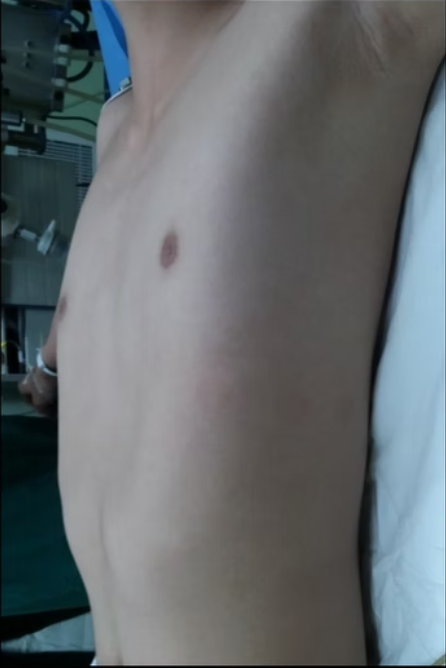
Platythorax is a structural deformity of the thoracic wall in which the anteroposterior diameter of the thorax is significantly smaller than the transverse diameter. The thorax of a healthy person has a natural oval shape that gives their internal organs plenty of room. But a flattened chest happens when the anteroposterior diameter is very small. In severe cases, this lack of internal volume can cause serious health problems and physical pain, with the anteroposterior diameter typically less than half of the transverse width.
Frequent Clinical Symptoms
The physiological effects of a platythorax chest are chiefly associated with the mechanical compression of the heart and lungs. The sternum is much closer to the spine, which means that these important organs don’t have much room to work well. Patients often experience symptoms such as palpitations, shortness of breath, and chest tightness, and are also prone to spontaneous pneumothorax. In addition to these physical symptoms, the deformity often causes a lot of mental stress and feelings of inferiority, which can make people withdraw from social situations and lose confidence in themselves.
New Ways to Fix
To correct this particular deformity, an advanced surgical method is needed. At The Institute of Chest Wall Surgery (ICWS), experts use the Wung procedure, an improved technique based on the Nuss procedure with innovative optimizations. It employs a safer and simpler method for plate placement and fixation, elevates the depressed structures, and restores a normal curved shape to the flat chest wall.
These innovations greatly improve surgical safety and effectiveness, reduce complications, and shorten recovery time.
Last Words
Patients can restore normal thoracic volume and contour with the Wung procedure. Taking care of both the functional compression and the aesthetic deformity will improve your quality of life and your long-term health.
