Unplanned belt stoppages stall critical bulk handling, logistics hubs, and manufacturing facilities without warning. Production assets sit idle while material backs up across upstream sorting lines, compounding financial losses minute by minute. Resolving conveyor belt fractures rapidly determines whether an outage remains a minor maintenance blip or triggers widespread delivery failures across distribution networks.
Splice selection governs how quickly field mechanics can restore belt motion and operational line capacity. Vulcanized methods require complex site preparation, specialized outside contractors, and hours of temperature-controlled curing. Mechanical splicing offers an alternative operational path, directly targeting the primary labor bottlenecks and environmental variables that extend conveyor downtime during emergency restorations.
Minimizing Framework Teardown and Rigging Overhead
Traditional vulcanization requires extensive physical preparation simply to position bulky splicing machinery over belt ends. Technicians often spend half a shift loosening drive drums, unbolting snub idlers, and jacking heavy take-up pulleys to gain sufficient belt slack. Disassembling surrounding framework and unbolting structural side guards adds significant labor overhead before splice preparation even starts.
Mechanical joints bypass structural dismantling because technicians connect belt ends directly inside existing conveyor beds. Repair crews pull severed belt ends together over slider decks or troughing idlers using standard tensioning come-alongs. Bypassing framework teardown preserves precision belt alignment, drive pulley squareness, and delicate belt scale calibrations that often wander after major reassembly.
Crews working with modern conveyor belt fastening systems skip the structural rigging steps that delay standard splicing crews. Mechanics secure belt ends right at the point of failure without disturbing adjacent machinery, drive motors, or safety fencing. Leaving structural mountings undisturbed ensures material transfer lines resume running immediately after fasteners interlock.
Compressing Joint Assembly from Shifts to Minutes
Hot vulcanization demands rigorous curing cycles governed by vulcanizing platens, specific dwell pressures, and thermal cooling limits. Chemical cold bonds also enforce rigid evaporation schedules before adhesives handle dynamic belt tension. Such chemical bonding and dwell windows routinely immobilize production lines for six to twelve consecutive hours while glues set.
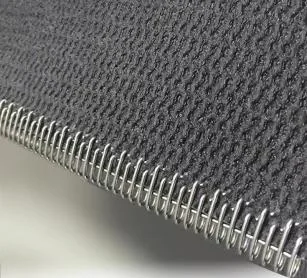
Specialized lacers compress joint preparation down to a fast mechanical sequence that requires no chemical bonding agents. Fastener teeth penetrate between longitudinal carcass fibers, clamping internal tensile cords without waiting for thermal reactions. Intake designs balanced wire hook configurations that reach immediate mechanical load capacity, letting technicians restart drive motors the moment the hinge closes.
Factory-carded hook strips accelerate installation across broad belting widths by keeping individual wire points rigid and spaced evenly. Technicians drop standardized strips into portable lacer jaws and crimp complete rows across the belt end in continuous strokes. Sourcing consistent hardware from an established conveyor belt fastener manufacturer ensures accurate hook alignment, allowing the splice to glide smoothly across belt cleaners.
Isolating Component Wear with Modular Hinge Pins
Continuous vulcanized loops present unforgiving failure characteristics when an edge tears or a localized carcass blister forms. Repairing bonded splices requires cutting away meters of usable belt, adjusting take-up carriages, and duplicating the original multi-hour curing sequence. Every localized joint repair becomes a major structural installation project that halts plant productivity.
Hinge-type mechanical splices decouple both belt ends through an independent, replaceable hinge pin assembly. Interlocking hook loops encircle this central pin, bearing rotational friction as the joint articulates around drive pulleys and gravity take-ups. Engineers at Intake supply precision hinge pins engineered to absorb abrasive wear and isolate destructive stresses away from carcass fabric.
Preventative maintenance becomes exceptionally swift when technicians treat the hinge pin as a sacrificial wear item. Maintenance crews pull out worn retaining pins and slide fresh pin stock through the loops in minutes. Maintaining properly matched conveyor belt fastening systems allows plants to renew joint integrity during standard lunch breaks or shift changeovers without cutting belt ends.
Navigating Tight Chutes and Low-Clearance Envelopes
Bulkier vulcanizing presses introduce substantial logistical hurdles inside restricted plant envelopes and tight access walkways. Heavy heating platens require overhead clearance, crane hoists, and dedicated three-phase power drops that rarely exist near elevated conveyors. Transporting heavy vulcanizing hardware up catwalks or into narrow underground transfer tunnels consumes hours of valuable repair time.
Hand-carried manual and hydraulic installation lacers overcome spatial constraints across cramped processing floors and sorting mezzanines. Maintenance workers easily transport modular lacer heads through access doors, up cage ladders, and onto elevated mezzanines. Equipment catalogs from Intake focus on lightweight clamping tools that operate effectively in confined chutes without external electrical cables or heavy generators.
Executing on-site repairs with hand-held lacers removes reliance on outside vulcanizing service teams who may require hours to mobilize. Plant mechanics correct torn splices immediately using stock components from their local toolroom. Procuring durable lacing stock from a certified conveyor belt fastener manufacturer equips maintenance staff to resolve joint failures anywhere along complex conveyor routes without delay.
Transforming Emergency Repairs into Planned Maintenance
Visual inspection of mechanical fasteners provides clear indicators of hardware wear before unexpected separation occurs. Technicians quickly spot hook elongation, missing loops, or scored pins during routine walking rounds without deploying ultrasonic scanning instruments. Early detection helps planners schedule routine joint maintenance during scheduled facility outages, shielding conveyor belt fastening systems from sudden operational failures mid-shift.
Standardizing mechanical lacing hardware across plant equipment streamlines spare parts inventory and speeds technician response. Maintenance groups stock matched fasteners tailored to specific carcass ratings, belt thicknesses, and pulley diameters. Partnering with a dedicated conveyor belt fastener manufacturer establishes consistent splicing protocols that stabilize operating budgets, streamline mechanic training, and substantially curtail ongoing conveyor delays.
