As energy demand becomes more dynamic, users need storage systems that can grow with changing requirements. A fixed-capacity battery may work in the beginning, but future expansion often requires a more flexible approach. This is why a modular battery storage system has become an important part of scalable energy storage architecture.
In simple terms, a modular battery storage system consists of multiple battery units that can operate independently or work together as a larger energy storage platform. Instead of replacing the entire system when demand increases, users can add additional modules and expand capacity step by step. This design improves investment efficiency and simplifies maintenance.
Why Is a Modular Battery Storage System Important?
Modern energy storage projects rarely remain static. Residential solar installations, small commercial facilities, telecom backup systems, and OEM energy solutions often need capacity upgrades over time. A modular design provides this flexibility.
Unlike conventional integrated systems, a modular battery storage system allows expansion without redesigning the whole architecture. New battery modules can be added according to actual energy demand, which helps optimize capital expenditure and improve system utilization.
Scalability is particularly valuable for system integrators and OEM partners. They can deploy a solution based on current requirements and increase capacity later, reducing unnecessary upfront investment.
How Does Scalable Energy Storage Architecture Work?
Scalable energy storage architecture is built around the concept of incremental growth. The battery system is divided into several standardized modules connected through communication and battery management systems.
Each module maintains balanced operation and shares charging and discharging loads. As power consumption rises, additional battery packs can be connected in parallel to increase storage capacity while maintaining system stability.
This approach offers several advantages. Installation becomes easier because modules are standardized. Maintenance costs are reduced because faulty units can be serviced individually. Transportation and deployment are also simplified compared with large integrated systems.
Another benefit is reliability. If one module requires maintenance, the remaining modules can continue supporting loads, minimizing downtime.
Why LiFePO4 Technology Supports Long-Term Expansion
Lithium iron phosphate chemistry has become one of the preferred technologies for energy storage applications because of its safety and long service life. LiFePO4 batteries provide excellent thermal stability and support thousands of cycles, making them suitable for systems expected to operate for many years. Research on LiFePO4 materials has shown that this chemistry delivers strong cycle performance and reliable charge-discharge behavior.
For scalable architecture, battery consistency is critical. Stable cell chemistry helps maintain balanced performance when multiple modules operate together. This is one reason why LiFePO4 batteries are widely adopted in residential and distributed energy storage systems.
Wall-Mounted 51.2V LiFePO4 Home Battery Solutions for Flexible Deployment
The demand for Wall-Mounted 51.2V LiFePO4 Home Battery products has increased because wall-mounted systems save installation space while providing high energy density. They are suitable for residential energy storage projects and can also serve as building blocks for OEM and customized applications.
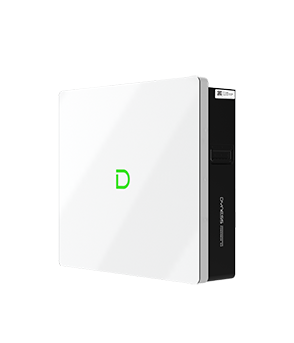
A good example is the Powerbox G2 developed by Dyness. The company focuses on energy storage technologies and provides residential, commercial, and industrial storage solutions for global partners. Its business model emphasizes cooperation with distributors, installers, and OEM or ODM customers.
According to official specifications, the Powerbox G2 is a Wall-Mounted 51.2V LiFePO4 Home Battery with a nominal energy of 10.24 kWh and a nominal voltage of 51.2V. The battery uses LiFePO4 cells and supports wall-mounted or floor-standing installation. Its slim structure helps optimize space utilization. The system supports up to 50 units connected in parallel, allowing energy capacity to expand from 10.24 kWh to 512 kWh. It also features IP66 protection, 1C discharge capability, built-in Wi-Fi monitoring, and a ten-year warranty. These specifications are based on official product information and datasheets.
Why Modular Design Benefits OEM and ODM Projects
For OEM and ODM partners, flexibility is often more important than a single large-capacity battery. Modular architecture enables manufacturers and system integrators to customize solutions according to regional regulations and customer requirements.
Inventory management becomes easier because standardized battery modules can be used across multiple projects. Expansion and after-sales service are simplified as well. End users gain a future-proof solution without replacing existing equipment.
As distributed energy systems continue to evolve, scalability has become a key factor in storage system design. A modular approach provides flexibility, reliability, and cost efficiency while supporting long-term energy growth. For partners seeking expandable solutions, Wall-Mounted 51.2V LiFePO4 Home Battery products with modular architecture represent an effective foundation for future energy storage development.
